Prayer Rug Shipping: FOB vs CIF vs EXW and Container Loading
FOB, CIF or EXW for prayer rugs from Indonesia? Who pays, who carries the risk, how containers are sized, and…

Pick chenille if you want a thick, textured surface that tends to hide wear and carries woven or embossed motifs. Pick velvet if a smooth, dense, glossy surface matters more than low maintenance. Treat polyester as a separate question, because chenille and velvet can both be made from it.
That last point is where most buying guides go wrong. They line up three words as if they were three options on one menu. They aren’t. This guide separates them, compares how each performs on a prayer rug, and ends with the specs to ask any supplier for before you approve a sample. It’s part of our wholesale prayer rug sourcing guide.
Chenille is a yarn with a fuzzy pile, woven into a thick, textured surface. Velvet is a fabric with a short, dense cut pile that feels smooth. Both are often made from polyester, so the fiber is a separate choice. Chenille tends to hide wear better, while velvet pile can show pressure marks.
So “chenille or polyester?” is not really a choice. A polyester chenille rug and a polyester velvet rug are both polyester. The questions to ask are: what is the surface construction (chenille or velvet), what is the fiber, and what sits underneath it (padding and backing).
One more caution on terms. Some sellers use “chenille” loosely for any soft, velvety-looking pile. That’s why a written spec matters more than the label.
The table describes tendencies, not guarantees. Fiber, pile length and construction change the result, and we haven’t lab-tested these categories against each other.
| Chenille | Velvet | Printed polyester (flat or short pile) | |
|---|---|---|---|
| Feel | Soft, slightly textured, can feel plush | Smooth, dense, often glossy | Varies with the pile used |
| Wear at knee and forehead zones | Textured surface tends to hide wear | Dense pile can show pressure marks and shading | Printed areas can fade where friction is highest |
| Design options | Woven and embossed motifs | Often printed or embossed | Printing gives the sharpest, most detailed artwork |
| Care | Check the supplier’s tested method | Check the supplier’s tested method | Check the supplier’s tested method |
| Relative cost | Depends on fiber and construction | Depends on fiber and construction | Often the lowest-cost route |
| Best fit | Everyday and premium retail, gifting, institutional | Gift and boutique lines | High-volume entry-price lines |
On cost, outside sources don’t agree. One custom-rug guide says velvet can run two to three times the price of polyester, while other sources describe chenille as generally cheaper than velvet. We don’t quote prices on this site. Compare quotes on the same specification, not on the fabric name.
A prayer rug takes its wear in predictable places: the forehead and nose area, the knees and toes, and the fold lines. Wear is concentrated, so average durability ratings tell you less than they would for a sofa.
Be careful with numbers you find online:
So the label (“chenille” or “velvet”) predicts less than the test result for the specific cloth. If a supplier quotes a durability number, ask for the method and the sample it was run on.
The surface also decides how the design is made.
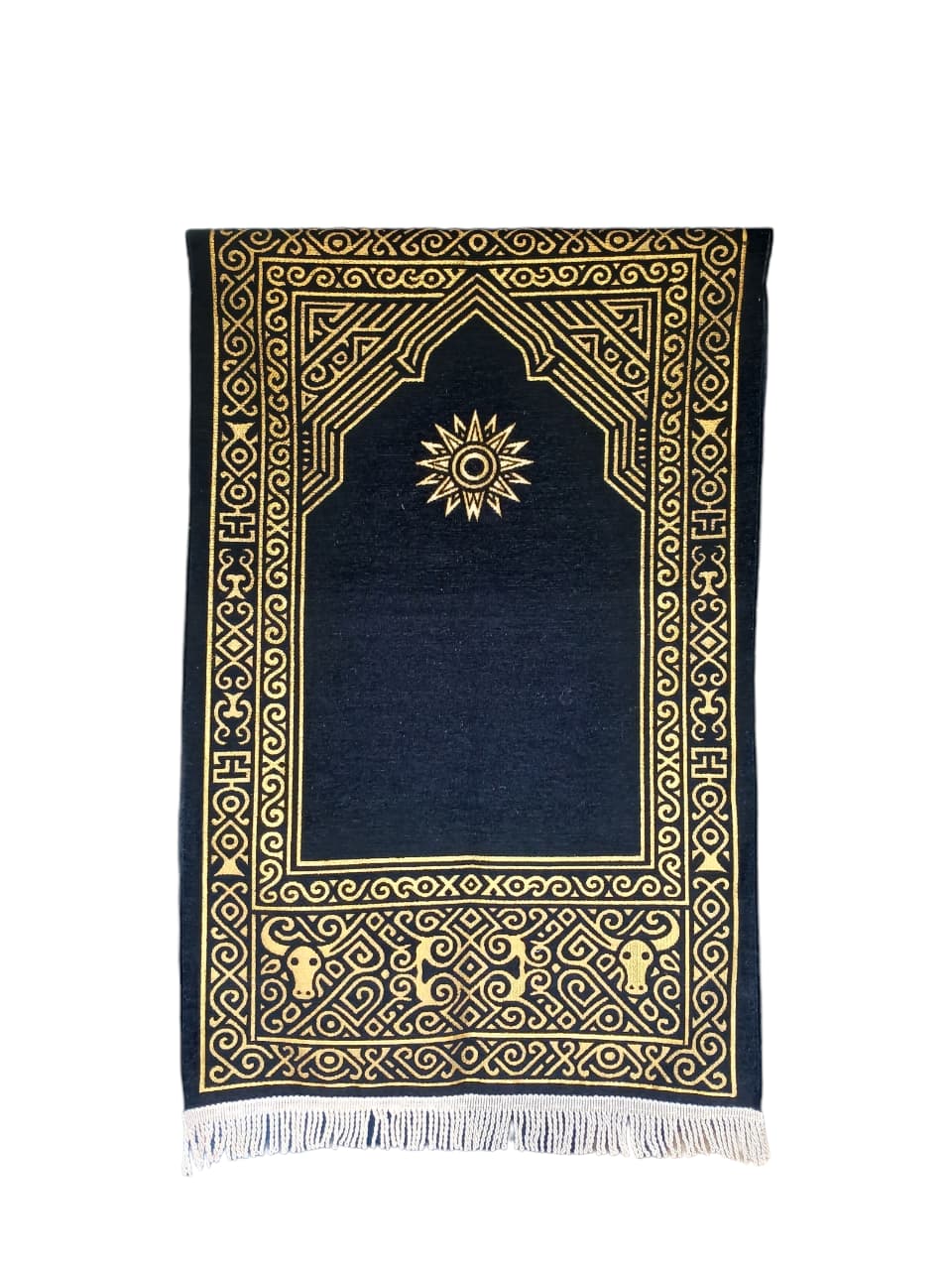
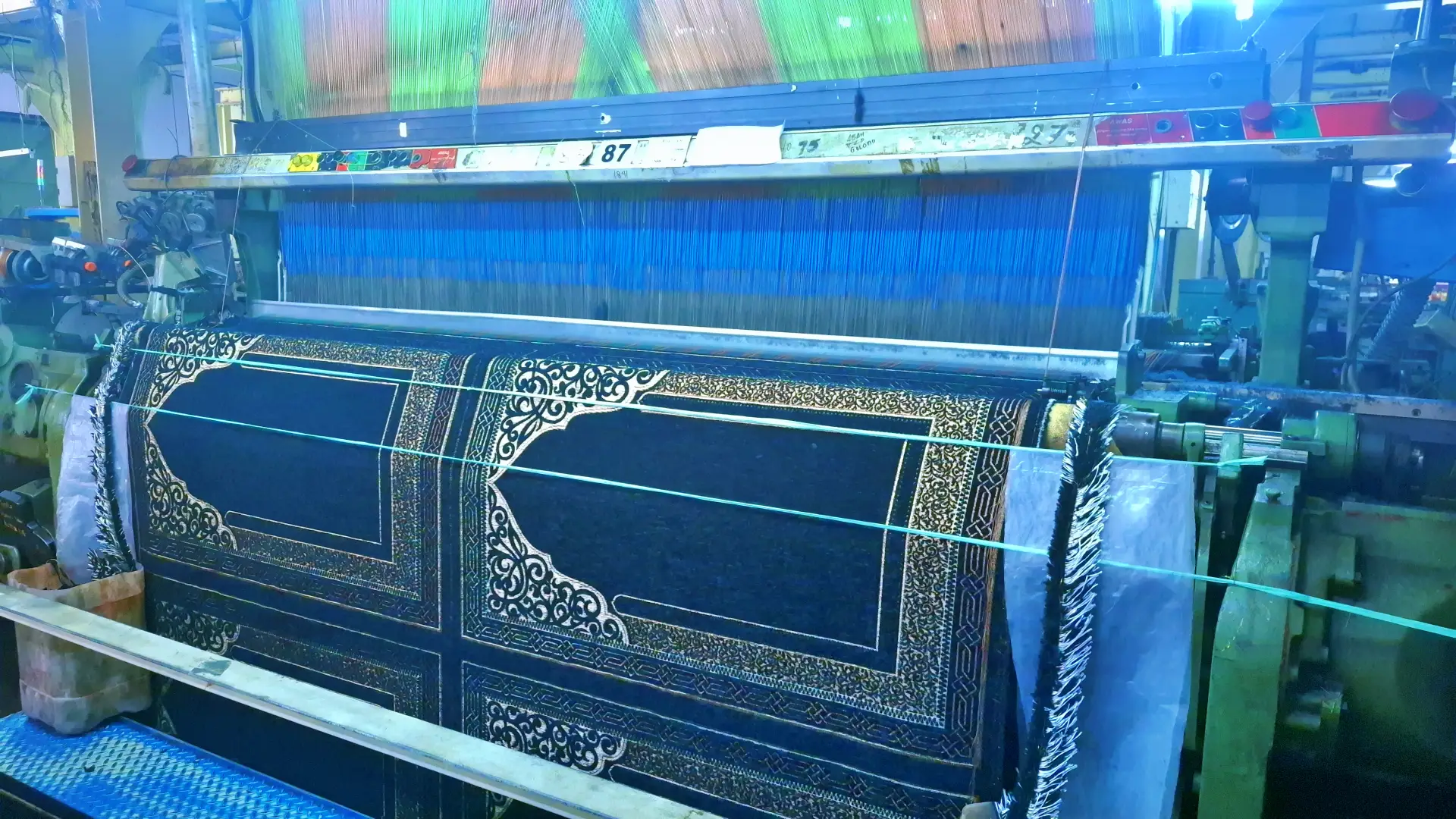
Our factory focus is chenille with embossed motifs, anti-slip backing, and custom sizes and colors. See our chenille prayer rug manufacturing page and our premium chenille fabric supply page for what we make. We don’t present velvet or printed polyester mats as our own products.
The surface fabric is only one layer. Two more decisions change how a rug performs:
These figures come from retail listings and are not verified specifications. Use them as a feel for the market, then set your own target and confirm it on a sample.
“Machine washable” means different things depending on construction. A thin woven mat, a mat with a foam core and a mat with a printed face don’t wash the same way. Rather than copy a care label from a competitor, ask the supplier which method they’ve tested, and make the care instructions on your packaging match that test.
For color stability, two standard test methods are worth naming when you talk to a supplier. ISO 105-X12 covers colour fastness to rubbing, including textile floor coverings. ISO 18168 covers colour fastness of textile floor coverings to shampooing. You don’t have to require both. They give you a precise way to ask “tested how?”
Specifications differ by design, size and order, so we confirm them for each project instead of publishing one fixed sheet. Ask our team on WhatsApp for the fiber, pile and backing details of the rug you have in mind.
Our wholesale FAQ covers samples and order terms, and our how to order page shows where sample approval sits in the process. For how we check goods before packing, see our quality control and export packing process.
Neither is better in every case. Chenille tends to hide wear and carries woven or embossed motifs well. Velvet gives a smoother, denser surface but can show pressure marks. The fiber, pile length and backing change the result, so judge a physical sample.
Softness depends on the fiber and pile, not just the name. Chenille usually feels plush and slightly textured, while velvet feels smooth and dense. Feel both on a sample before you decide.
It depends on construction. A thin woven mat is not the same as a mat with a foam core. Ask the supplier which cleaning method they have tested, and base your care label on that.
Polyester is a common, practical fiber for both chenille and velvet rugs. What matters is how the surface is made, how the colors are applied, and how the finished rug is tested.
Yes. We make custom motifs, colors and sizes for private-label and OEM buyers. Message our team on WhatsApp with your artwork, target market and quantity.
Comparing materials for a new line? Tell us your target market and we’ll talk you through chenille options and sample steps. Message our team on WhatsApp.
Market figures in this guide come from public retail listings and buyer guides and are not Sakakriya specifications. Last checked: 23 November 2026.
Sources: Chenille fabric and pile (textile) entries, Wikipedia; Merriam-Webster, “chenille”; Sailrite, “Velvet vs. Chenille”; Just Fabrics, “Velvet vs Chenille”; Roger + Chris, “How is fabric durability measured?”; fabric-fabric.com, chenille upholstery guide; DergiPark, research paper on chenille yarn pile length and abrasion; ISO 105-X12:2016 (colour fastness to rubbing); ISO 18168:2015 (colour fastness of textile floor coverings to shampooing); RareCustom custom-rug material guide; Modern Wall Arts prayer mat buying guide; retail listings on Centrepoint, Carrefour UAE and Rokomari (accessed November 2026).
This article is part of our complete guide: Wholesale Prayer Rugs: The Complete B2B Sourcing Guide.