Prayer Rug Samples: The Approval Process Before Bulk Orders
How a prayer rug sample round works: what to put in the brief, what to check, how to approve it…

For a factory exporting prayer rugs by sea, FOB is the usual starting point: you book the freight, and the goods are yours to insure once they’re on the vessel. CIF puts freight and insurance on the seller, but the risk still passes at loading. EXW leaves almost everything to the buyer. The right choice depends on how much of the shipping you want to control.
This guide explains the three terms in plain language, shows how container sizes affect your order, and lists what to ask the factory before a container is booked. It’s part of our wholesale prayer rug sourcing guide. It’s general information, and your forwarder and the Incoterms 2020 rules from the International Chamber of Commerce are the authority.
| EXW (Ex Works) | FOB (Free on Board) | CIF (Cost, Insurance and Freight) | |
|---|---|---|---|
| Seller’s duty ends | Goods made available at a named place | Goods loaded on the buyer’s vessel at the named port | Goods loaded on the vessel at the port of shipment |
| Who books and pays main freight | Buyer | Buyer | Seller, to the destination port |
| Insurance | No seller duty | No seller duty | Seller must arrange insurance, at least the minimum cover |
| Risk passes to buyer | When goods are placed at the buyer’s disposal | When goods are on board | When goods are on board, even though the seller pays freight |
| Export clearance | Buyer | Seller | Seller |
FOB, CFR and CIF are Incoterms for sea and inland waterway transport. EXW works for any mode.
One more point. ICC guidance notes that FOB, CFR and CIF fit goods loaded onto a vessel, while containerized cargo handed to a terminal is often better served by FCA, CPT or CIP. If your forwarder suggests one of those, ask why, and agree the term in writing on the proforma invoice.
Incoterms don’t cover whether the goods match the contract, late delivery, or how disputes are settled. They also don’t decide who pays import duty, unloading or local delivery at your end. Under FOB and CIF those costs are typically the buyer’s, so build them into your landed cost. For classification and duty, see our guide to prayer mat HS codes and export documents.
Most prayer rug shipments move in 20 ft or 40 ft high cube containers. DHL’s published figures, which vary by manufacturer and model, give a sense of scale:
| 20 ft standard | 40 ft high cube | |
|---|---|---|
| Minimum internal dimensions | 5.867 x 2.350 x 2.330 m | 11.998 x 2.330 x 2.655 m |
| Approximate volume | About 33 m³ | About 76 m³ (one regional DHL page lists 86 m³) |
| Approximate maximum payload | About 28,230 kg | About 26,330 kg |
The ISO standard sets a maximum gross weight of 30,480 kg including cargo. Exact figures are on the container’s data plate, so treat the table as approximate.
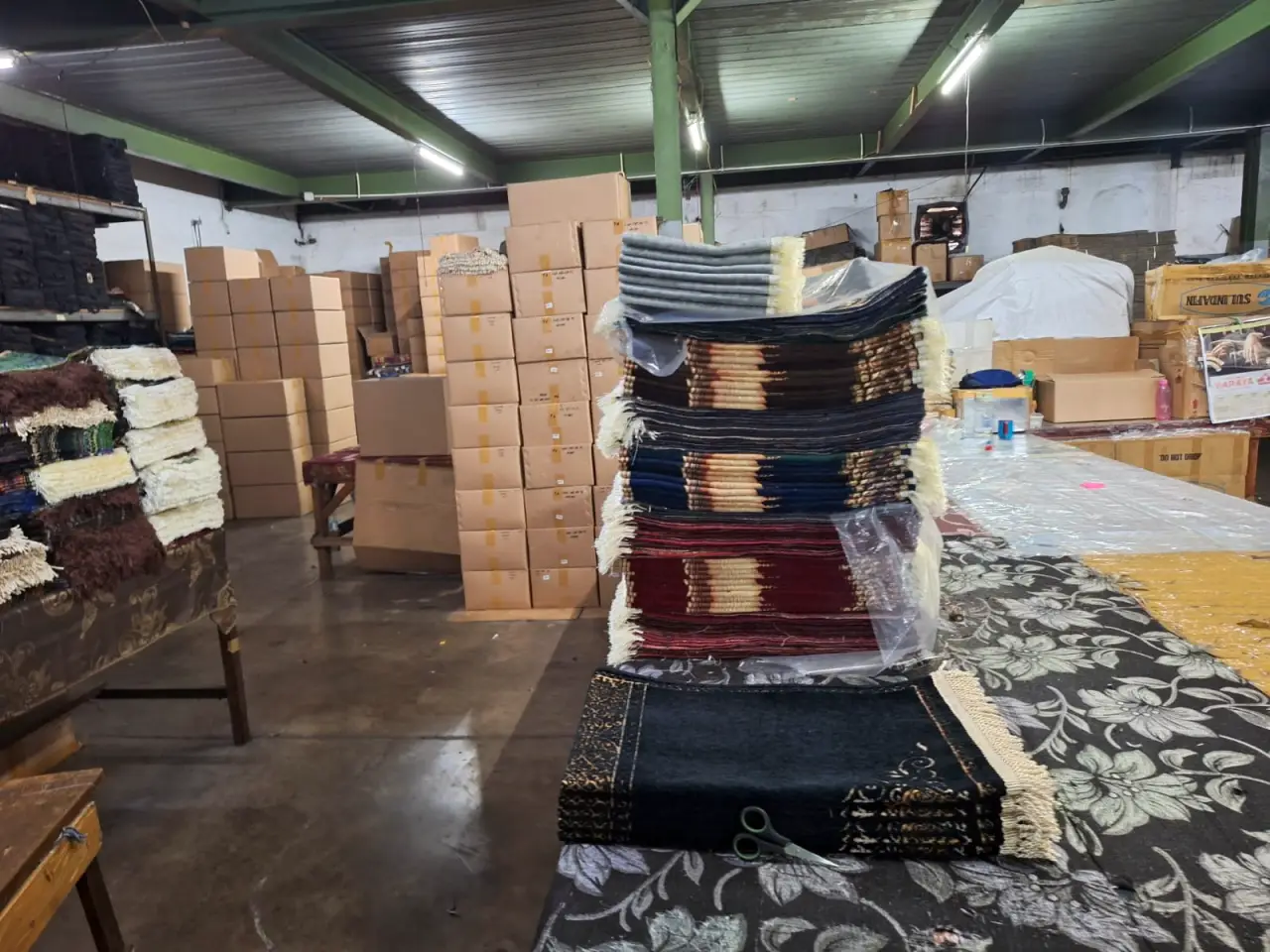
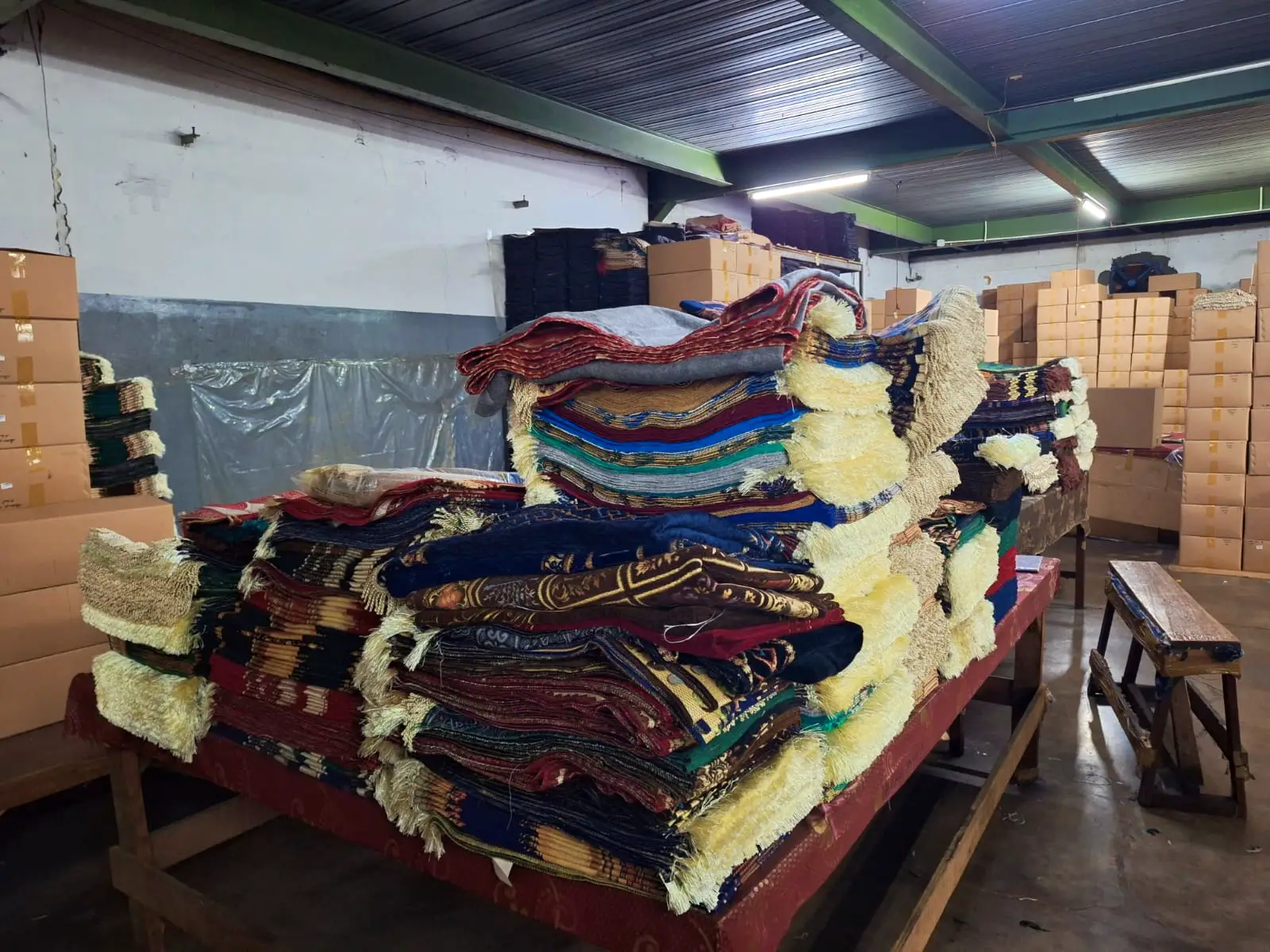
For light, bulky goods such as textiles, space tends to run out before weight capacity does. That’s why the pack style (rolled, folded or boxed) and the carton dimensions matter more to the loading plan than the weight.
A full container load (FCL) gives you the whole container. A less-than-container load (LCL) shares one with other cargo, which can suit small orders but adds handling and consolidation steps. Ask your forwarder to compare both for your quantity and destination.
Carrier guidance on shipping rolled textiles and carpets is consistent on a few points:
How this applies depends on the rug’s pack style and the route. We confirm packing and loading for each order. See our quality control and export packing process.
We coordinate freight booking, export documentation and container loading as part of the order, and our how to order page shows where shipping sits in the process. Shipping terms, loading plans and carton details depend on the product and destination, so we confirm them for each order. Ask our team on WhatsApp with your destination and quantity.
Choose FOB if you want to control the freight booking and compare forwarder quotes. Choose CIF if you want one quote to your destination port, and check what insurance cover it includes. Either way, the risk passes to you when the goods are loaded.
It depends on the rug size, pack style and carton dimensions. We calculate the loading plan for each order, so ask us with your product and quantity in mind.
Shared (LCL) shipments exist, but suitability depends on quantity, destination and handling. Ask us and your forwarder to compare options.
No. Import duty, taxes and local delivery at your end are normally the buyer’s, so include them when you calculate landed cost.
Incoterms and container figures come from public carrier and trade sources and are approximate. Confirm terms against the ICC Incoterms 2020 rules and with your forwarder. This page is general information, not legal or customs advice. Last checked: 23 November 2026.
Sources: International Chamber of Commerce, Incoterms 2020 rules; DHL Global Forwarding, “Incoterms explained”; UPS Supply Chain Solutions, “Incoterms 2020”; US International Trade Administration (trade.gov), Incoterms overview; DHL Global Forwarding, “Cargo container sizes and types”; DHL Global Forwarding, “How to ship any goods”; Racklify, “How to Ship Rugs and Carpets”.
This article is part of our complete guide: Wholesale Prayer Rugs: The Complete B2B Sourcing Guide.